
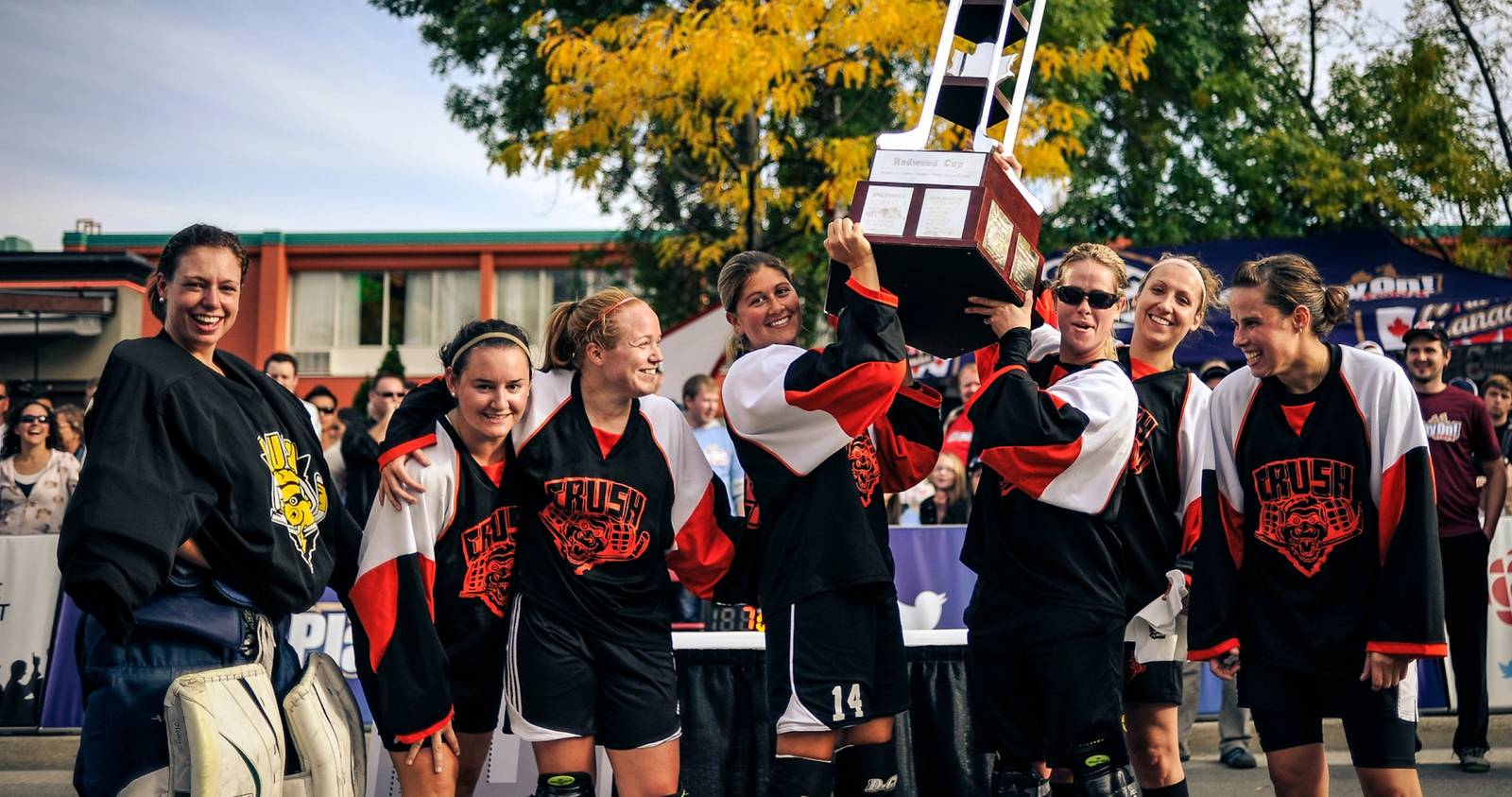
It Was Never Just Street Hockey
Same old. Same old. Another street hockey game. That’s what most people think. Just a ball, a few nets, and a weekend. Nothing complicated. Nothing that’s supposed to stay with you.
But Play On! was never that.
For Jake Clarke, it started in Toronto in May 2012, at Ontario Place with a background of the CN Tower. A friend of his had just come out of university and was working on the program, and Jake went to check it out. What he walked into was something bigger than expected. A full downtown setup, over 40 temporary rinks, a celebrity game, and an energy that felt different from anything he had ever seen in hockey before.
Hockey had always been part of his life, from playing competitively to working over a decade in various levels of professional hockey, including the NHL, but this was different. It brought him back to the game in a way that felt simple again.
When asked about his most special memories after working on the Play On! program for a decade, that Toronto moment stood out. But for Jake, it wasn’t the one that defined everything.
That came a year and a bit later in Yarmouth, Nova Scotia.
Driving in from Halifax, Jake and the team expected to set things up like any other event. Instead, they arrived to find a city that had already done much of it for them. Murals were up. Streets were swept and ready. Flags were flying on every main street lamp post. The community had already prepared fully for Play On! before the first rink was even built.
Schools were closed so students could attend. Thursday and Friday, the whole town, the whole region, showed up in full force. The entire community leaned in. It wasn’t just participation. It was full buy-in.
That was the moment it really clicked for Jake. This wasn’t just about running an event. It meant something much more to the people showing up.
Yarmouth became one of those defining experiences. A feature rink built on a lobster wharf, CBC broadcasting live with Andi Petrillo hosting. Huge crowds surrounding every game, and Dean Brody performing the national anthem and, later, a free concert including his hit "Canadia Girls" before the Elite women's final was played. Everything came together in a way that felt like it was all meant to be.
At the time, it felt like the beginning of something that would inevitably fill the entire nation.
“If you told me that Yarmouth event would be the start of the end of Play On!, not the true beginning, I wouldn’t have believed you.”
Just a few weeks after that event that meant so much to so many, the media landscape in Canada shifted. Partnerships changed, and the model for Play On! had to evolve. What felt like incredible momentum suddenly became uncertainty. Yet even with those changes, the impact of moments like Yarmouth never faded.
Because what Play On! created is hard to put into words.
You can describe 650 teams and over 5,000 players taking over a downtown core, filling hotels, restaurants, and streets. You can talk about the scale, the numbers, the logistics. But that still doesn’t fully capture it.
You had to be there.
You had to see kids crying after games. Some because they lost, others because they won. You had to see players diving on pavement and blocking shots in recreational divisions like it was the biggest moment of their lives, because it was.
And at the center of it all were the people.
For Jake, that is what made him stay. It wasn’t one moment, but the relationships. The friendships built over years and the time spent off the rink just as much as on it. Meals at the Hill family home. Staying connected. Showing up for each other. Somewhere along the way, it became more than just running events. It became part of life.
That connection extended beyond the core team. Referees, volunteers, and players kept coming back because they wanted to. Not because they had to. Some travelled all over the country. And over time, those experiences shaped more than just memories.
They built people.
Some, like Gary Crossman in New Brunswick, turned that experience into a full career in ball hockey and now lead major initiatives and facilities. Others, like Lamont French, continued growing within the sport at a national level. What started on the street did not stay there.
Even at the highest level, the same idea held true.
Play On! did not treat NHL players like celebrities. Players like Connor McDavid, Anthony Stewart, Devante Smith-Pelly, and at least a hundred more current NHL players showed up the same way everyone else did. Not for the spotlight, but to be part of it. They played with friends. They blended into teams. They showed up for the same reason as everyone else; to enjoy the game.
In some moments, it was simple. Jake recalled Anthony Stewart handing his stick or gloves to a kid in Toronto. Letting them take a shot. Turning a small moment into something they would remember.
They were not there as stars.
They were part of it.
It also shaped Jake in ways that went far beyond the rink. Professionally, it taught him how to handle pressure and make decisions when everything is happening at once. Now working for Ringette Canada, when plans fall apart and there is no time to second guess, Jake is calm and collected. Personally, it built trust, resilience, adaptability, calm under great pressure, and a deeper understanding of people across different communities.
Because no matter where Play On! went, whether it was Newfoundland, Vancouver, or Saskatchewan, the setup stayed the same, but the experience never did. Each community brought its own identity and energy.
That is what made Play On! different.
It was never just the game. It was how people connected through it.
Even now, years later, that connection has not disappeared. People from all over the country still reach out every day. They still ask if it's coming back. They still remember what it felt like to be part of it.
And for Jake, that says everything.
Because Play On! was never just street hockey.
It was something people experienced and continue to carry with them long after the game ended, something that they always will.
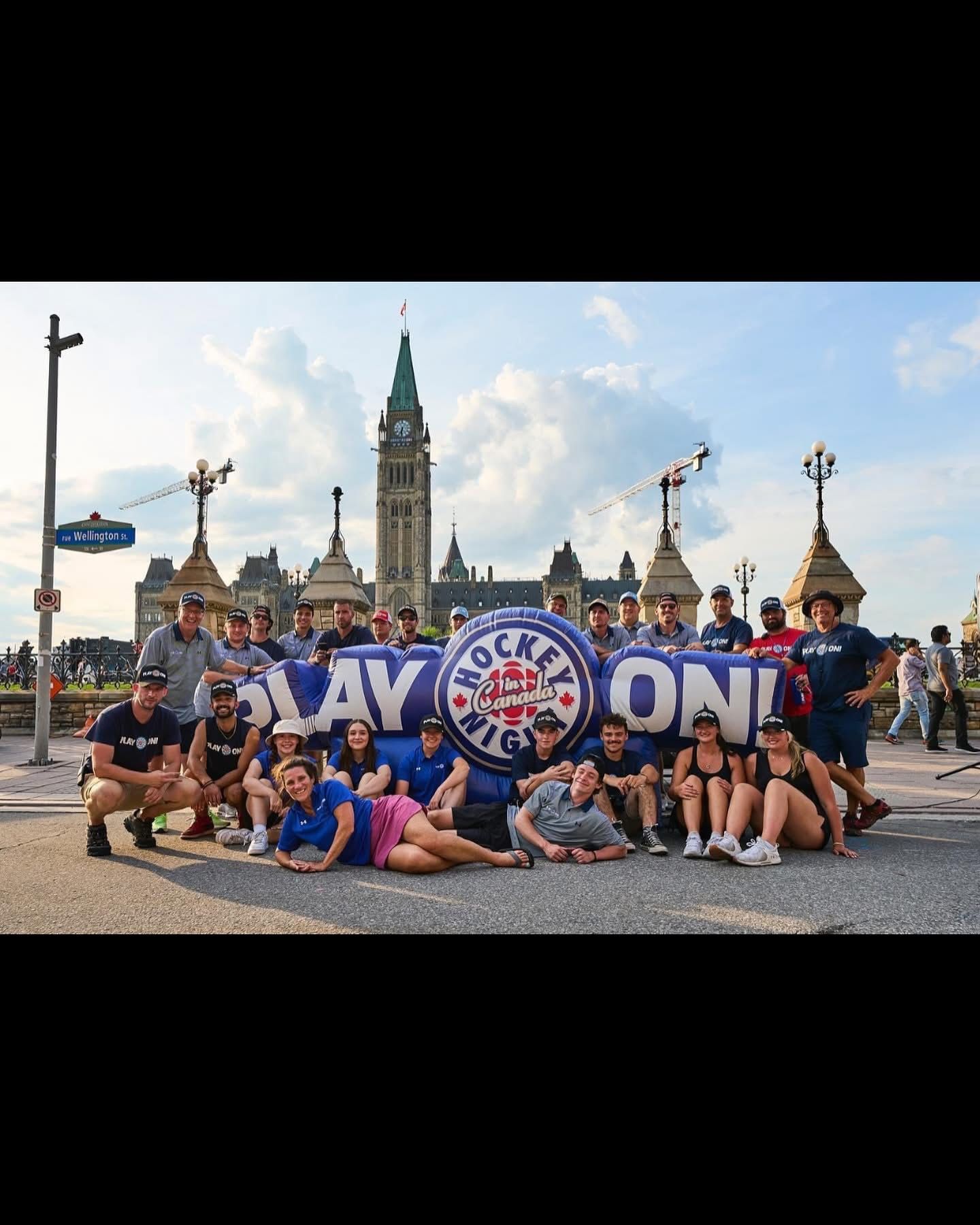
Below: Staff photo taken after Play On! in Yarmouth (2013).
Top visible from Left: Phil Samek, Jake Clarke, Ron Daniels, Cassandra Hill, Scott Hill, Adam Thomas, Charles Musto (Event Director), Melissa Sbrega, Terri-Lyn Finley, Rachel Harvey
Bottom from Left: Paul MacDonald (Chair, Local Organizing Committee), Michael Colley, Eric Hein, Kyle Crook, Matt Boyle, Matt Oxford, Jaime Martinez, Parker Stewart, Jake Elliot, Sandi Barrett, Shalini Krishnan, Roxanne Robinson.